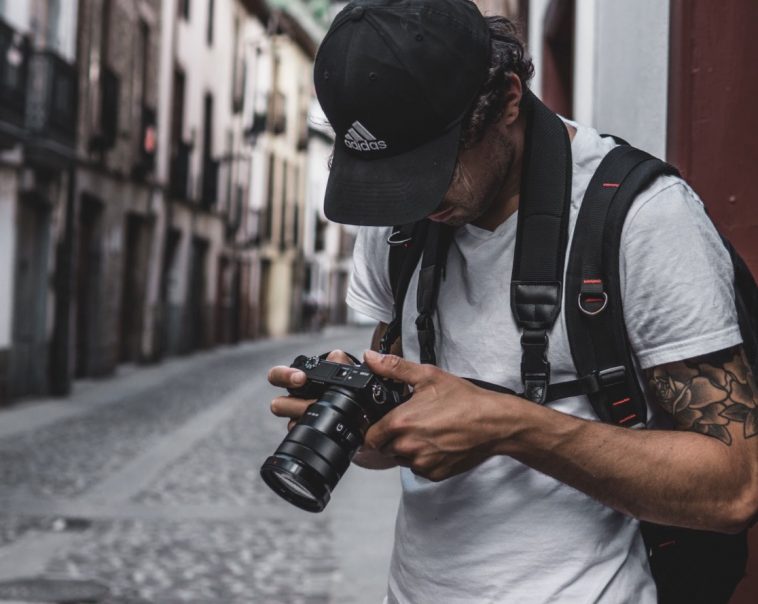
<p>Photography has come a long way in the last couple decades. In fact, you could argue that its advancements have been far greater in the last 20 years alone than the entire 20th Century. From the popularisation of digital cameras to the growth of social media, there have been many inventions and events that have dramatically changed the way we view photography. Below are just some of the biggest changes to photography since the turn of the century &#8211; as well as a few predictions for the future of photography.</p>
<h2>Cameras go digital</h2>
<p>The first fully digital camera was the <a href="https://petapixel.com/2016/06/09/photo-history-worlds-first-fully-digital-camera-invented-fuji/">FUJIX DS-1P</a>, which was introduced to the market in 1988. It was quickly copied and improved by other camera manufacturers, however adoption of digital cameras was slow. In fact, it wasn’t until 2003 that digital cameras outsold film cameras.</p>
<p>The reason the 00s saw a big boom in digital camera purchases was because more people owned a PC. And this meant that more people saw the convenience of being able to print off photos at home, as well as being able to store masses of photos on a hard drive instead of having to use bulky photo albums. Meanwhile, professional photographers has almost all moved to digital cameras by the 2000s, realising the potential of being able to digitally edit photos (which we’ll delve into more later…).</p>
<p>Digital camera technology continued to progress during the 00s. In 2004, the first mirrorless camera (the Epson R-D1) went on sale &#8211; which used an electronic viewfinder instead of a traditional mirrored viewfinder. By 2010, mirrorless cameras were more affordable and widely available. And of course, it was around this time that smartphone cameras would take off.</p>
<h2>The rise of phone cameras</h2>
<p>The first ever ‘camera phone’ was released in 1999 &#8211; the <a href="https://kimon.hosting.nyu.edu/physical-electrical-digital/items/show/1518">Kyocera Visual Phone VP-210</a>. The idea quickly caught on among mobile phone manufacturers and almost half the world’s mobile phones had an in-built camera by 2006.</p>
<p>In the early 00s, the rise of camera phones in Japan led to the popularity of the ‘selfie’. At first, most mobile phones only had a camera on the back, which meant that selfies almost always had to be taken in a mirror. However, mobile phones with self-facing cameras would change this. Such cameras became popular on phones in Japan in the early 00s, but did not start regularly appearing on internationally sold mobile phones until 2010.</p>
<p>Around 2010, the smartphone would become popular. Smartphones allowed users to take photos and instantly upload them onto the internet. The introduction of apps meanwhile allowed all kinds of photo editing possibilities from one’s phone.</p>
<p>Mobile phone camera technology would continue to progress into the 2010s. The widespread adoption of dual cameras and increased megapixel rates allowed mobile phone cameras to rival most regular digital cameras. Most professional photographers are still reluctant to switch their camera for a smartphone, however there has become a growing appreciation for <a href="https://www.eyeem.com/blog/16-mobile-photographers-you-want-to-know">mobile photography</a> &#8211; with some photographers starting to make a name for themselves solely for their use of an iPhone or Samsung in order to take pictures.</p>
<h2>The influence of social media</h2>
<p>Social media has encouraged rapid sharing of photographs online. This has had all kinds of effects on photography trends, as well as redefining the purpose as to why many of us take photos.</p>
<p>Launched in 2004, Flickr became the first social media site dedicated to photo sharing. By August 2011, the site hosted more than 6 billion images.</p>
<p>Instagram was launched in 2010 and is believed to be the site that truly made sharing personal photos online trendy. Initially available only as a mobile app, Instagram encouraged people to upload photos directly from their mobile phones. This led to more people documenting their personal lives online through photographs, while also giving birth to social media influencers.</p>
<p>There are many clear benefits of being able to share photos on social media from being able to track down lost items and pets more easily, to simply being able to share memories with friends more easily. However, sharing personal photos on social media has also had drawbacks from increasing cases of body dysmorphia among young people to increasing cases of depression caused by <a href="https://www.sciencedirect.com/science/article/abs/pii/S0268401220314547">social media envy</a>.</p>
<p>Has social media had a positive effect on professional photographers? Some would argue that it has devalued photography as an art and that it has made it too easy for photographs to be stolen, shared and edited without permission. Others would argue that it has given photographers an invaluable marketing tool. In the past, the only way to show potential clients your work was to lug around a physical portfolio. Social media serves as a digital portfolio that can be accessed from any location &#8211; you can connect with people around the world and attract credibility through likes and follows.</p>
<h2>Aerial photography for the masses</h2>
<p>Drone photography is a more recent innovation that has also transformed photography. Before the popularity of personal drones, you needed a helicopter to take aerial photographs. Drones have made it possible for more people to experiment with photos taken from the sky, as well as exploring new angles that would otherwise be impossible to take a photograph from.</p>
<p>While drones have been used by the military for over 100 years, it was not until 2013 that drones became commercially available to everyone. The DJI Phantom 1 was the first true drone to be sold for non-commercial use. Since then, drone technology has come a long way &#8211; modern models like the <a href="https://drdrone.ca/blogs/drone-news-drone-help-blog/dji-matrice-350-rtk-release">DJI Matrice 350 RTK</a> have a superior battery and transmission system.</p>
<p>Drone photography has served many valuable commercial uses outside of the military in the last 10 years. From unique wedding photos to stunning real estate photos, drones have enabled many professional photographers to stand out from the crowd. As they become more advanced in the future, they could open up even greater possibilities.</p>
<h2>Photoshopping and the problem of authenticity</h2>
<p>Editing images is nothing new. In fact, many dictators throughout the 20th Century were known to hire people to manipulate images in order to rewrite history by removing certain people. Of course, digital editing didn’t arrive until the 80s when computers started to become accessible. Then in 1990, Adobe Photoshop was released, helping to make photo editing even easier and leading to the term ‘photoshopping’.</p>
<p>By the 00s, photoshopping was widely practised by photographers. Almost every photographer owned a digital camera, which they could use to transfer photos directly to a computer. In 2001, Photoshop Elements was released, which served as a streamlined version of Photoshop that was easier to use for those that weren’t digitally savvy. Programs like Adobe Lightroom meanwhile helped to organise large libraries of photos and enabled original versions of photos to be maintained.</p>
<p>The development of smartphones and apps with photo filters would eventually make it possible for everyday people to doctor photos with the click of a button. Meanwhile, the more recent development of AI will likely create new exciting possibilities &#8211; using tools like ‘generative fill’, it’s now possible to automatically conjure up a new background to a photo or expand a photo and automatically fill in the space. Soon any photo will be possible to radically alter with the click of a button.</p>
<p>Making image manipulation easier has helped to boost the quality of professional photographs by allowing any blemishes to be removed. However, it has also proved controversial by distorting the truth. When it comes to photoshopping female celebrities, many people have accused the technology of encouraging unobtainable beauty standards within society. In other cases, it has become harder to know what is real and what is not, as was the case with the digitally altered crowds in George W Bush’s election campaign in 2004.</p>
<p>Many photography contests have made it a rule to only accept non-doctored images in order to try to celebrate authenticity. However, photoshopped images have still slipped through the net &#8211; as was the case with National Geographic’s notorious 2010 photo contest in which they were forced to admit that the<a href="https://www.businessinsider.com/natgeo-cops-to-recent-photo-fraud-plus-10-major-photoshopping-scandals-2010-6?r=US&;IR=T"> winning photo had been digitally altered</a>. As for social media, platforms like BeReal have been encouraging people to share natural undoctored photos of themselves.</p>
<h2>Security improvements and privacy concerns</h2>
<p>Advancements in photography technology have had an impact on both security and privacy &#8211; in some cases helping to improve things and in other cases making things worse.</p>
<p>For example, drones can now be used as flying security cameras to follow criminals on the run. This is easier than using a helicopter. However, public access to drones also poses a privacy risk and many people have been using them to trespass into areas they are not allowed or snoop on people through windows.</p>
<p>Access to a camera on our smartphone at all times has allowed for technology like facial recognition software to be popularised. This was believed to be stronger than a password, however recent AI developments have made it potentially easier to hack facial recognition tools.</p>
<p>In fact, AI could pose a real challenge in the future by making it much easier to falsify photographic evidence. At the same time, AI may be able to help us detect more easily whether a photo is authentic or not. It will likely be an ongoing battle.</p>

How Has Photography Changed In The 21st Century?