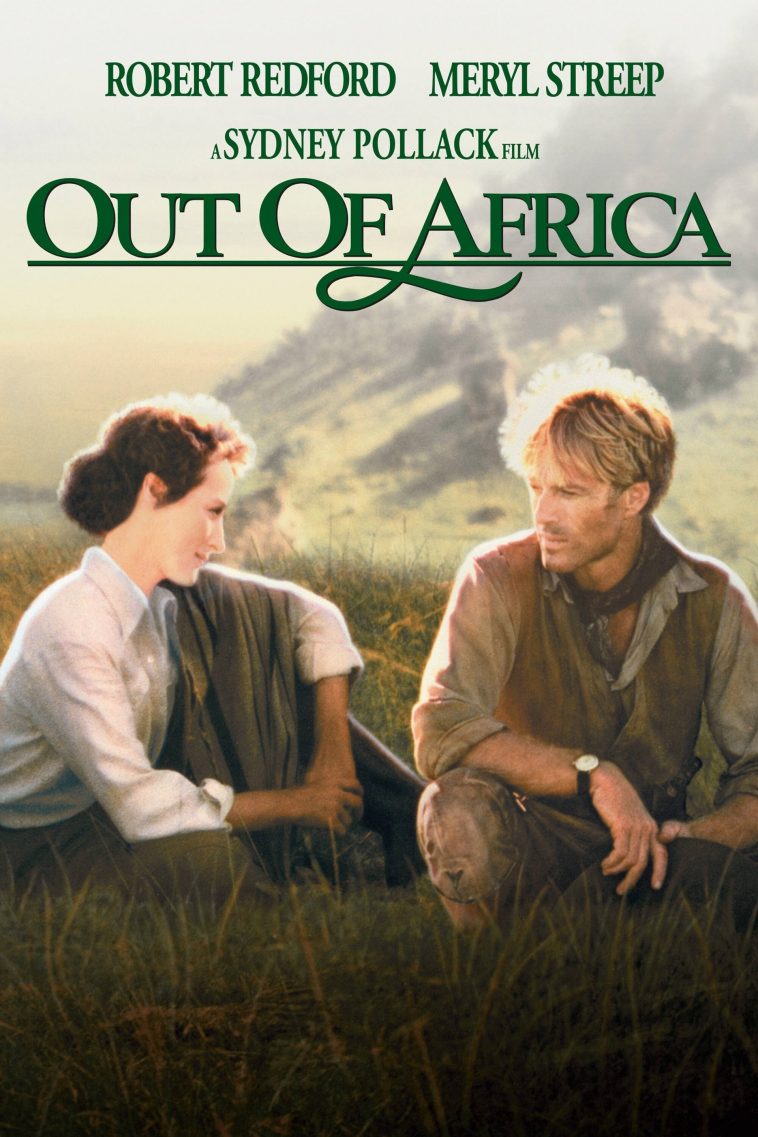
<p>&#8220;Out of Africa&#8221; is a cinematic love letter to the vibrant landscapes and rich culture of the African continent, filmed in the place where its story is set—Kenya. Released in 1985 and starring Meryl Streep and Robert Redford, the film captures the allure and complexity of Kenya during the early 20th century through its stunning visuals and compelling narrative. Based on the autobiographical work of Danish author Karen Blixen, the movie traces her life on a Kenyan coffee plantation, embracing themes of love, loss, and identity against the backdrop of colonial Africa.</p>
<p>The film&#8217;s remarkable authenticity is achieved by shooting on location in Kenya, where the cast and crew immersed themselves in the surroundings that Blixen herself admired. Kenya serves not only as a backdrop for the story but also as a character in its own right, contributing to the film&#8217;s warm reception and long-standing legacy. The locations chosen were meticulously selected to reflect the story&#8217;s period setting and Blixen&#8217;s personal journey. Through its lens, viewers are transported to fervent safaris, verdant plantations, and the untamed beauty of the African plains.</p>
<p>Let&#8217;s talk about where was Out of Africa filmed.</p>
<h3>Key Takeaways</h3>
<ul>
<li>&#8220;Out of Africa&#8221; was filmed on location in Kenya, reflecting the setting of Danish author Karen Blixen&#8217;s autobiographical account</li>
<li>The film stars Meryl Streep and Robert Redford, capturing the nuances of their characters amidst the historical context of colonial Africa</li>
<li>The acclaimed cinematography and authentic filming locations contributed significantly to the film&#8217;s success and impact on cinema</li>
</ul>
<h2>Production Background</h2>
<p>The 1985 film <em>Out of Africa</em> is a poignant exploration into the life of Baroness Karen Blixen, whose memoirs captivated millions. Directed with a careful eye by <strong>Sydney Pollack</strong>, this cinematic gem weaves a beautiful tapestry of romance and hardship. Pollack&#8217;s directorial expertise guided the film&#8217;s vision, ensuring each frame captured the essence of Blixen&#8217;s story.</p>
<p>Penned by <strong>Kurt Luedtke</strong>, the screenplay transforms Blixen&#8217;s words, originally published under her pen name <em>Isak Dinesen</em>, into eloquent dialogues and scenes. The film navigates the life of Blixen, a Danish Baroness who owns a coffee plantation in Kenya, delving into her relationships, most notably with the adventurer <strong>Denys Finch Hatton</strong>.</p>
<p>It&#8217;s a biographical narration that does more than just recount events. It brings out the vivid emotions and complex dynamics of Karen Blixen&#8217;s experiences. Each character is meticulously crafted, showing the depth of their real-life counterparts. Whether it&#8217;s the resolve of the Baroness or the charisma of Finch Hatton, the film ensures audiences feel a personal connection to their journeys.</p>
<p><em>Out of Africa</em> stands out not just for its heartfelt storyline but for the warmth that Sydney Pollack and his team injected into every aspect of the production. It&#8217;s this touch that makes the movie feel like more than a historical recount; it feels like peering into someone&#8217;s soulful memory album, filled with love, loss, and the kind of breathtaking beauty that can only be found in the heart of Africa.</p>
<h2>Filming Locations in Kenya</h2>
<p>The film &#8220;Out of Africa&#8221; showcased Kenya&#8217;s most striking landscapes, immersing viewers in the beauty that makes this country a top safari destination. The movie&#8217;s locations not only highlighted the majesty of African wilderness but also offered a glimpse into historical sites and colonial legacies. Here is where was Out of Africa filmed.</p>
<h3>Primary Sites</h3>
<p><strong>Nairobi</strong>: The heart of Kenya&#8217;s film journey begins in its capital. Key scenes were set in the Muthaiga Country Club, a hub for Nairobi&#8217;s foreign elite during the period depicted. While not filmed at the club itself, this place represents the colonial ambiance of the era.</p>
<p><em>Karen Blixen Museum</em>: A stone&#8217;s throw away from Nairobi&#8217;s busy center, one finds the serene former home of the famous Danish author. The museum, previously Karen&#8217;s coffee farm, offers a tangible peek into her life there and doubles as a preserved film location.</p>
<h3>Shaba National Reserve</h3>
<p>Located in the semi-desert region of Kenya, the Shaba National Reserve was a crucial filming site. This reserve is best recognized for its rugged landscape, which provided a backdrop that was both authentic and breathtaking—a real testament to Kenya&#8217;s natural beauty and the thrill of safari adventures.</p>
<h3>Ngong Hills</h3>
<p>The iconic Ngong Hills, part of the Great Rift Valley, are unmistakably etched into viewers&#8217; memories, as these rolling green peaks frame some of the movie&#8217;s most memorable scenes. One can practically feel the calmness of these hills, which serve as a reminder of the area&#8217;s impact on local communities, as they&#8217;re closely tied to both traditional and modern livelihoods, including schools and agriculture.</p>
<h2>Cast and Characters</h2>
<p>The heart of &#8220;Out of Africa&#8221; lies in the captivating performances of the cast. Viewers are taken on a journey through Kenya as the actors bring to life the complex relationships and vibrant cultures of the 20th century.</p>
<h3>Lead Roles</h3>
<p><strong>Meryl Streep</strong> portrays the spirited and headstrong <strong>Karen Blixen</strong>, a Danish baroness and writer who owns a plantation in Kenya. Streep&#8217;s nuanced performance reflects the character&#8217;s intricate emotions and stoic resilience.</p>
<p><strong>Robert Redford</strong> steps into the shoes of <strong>Denys Finch Hatton,</strong> a charming big-game hunter who becomes Karen&#8217;s love interest. His portrayal exudes the easy-going charisma and quiet intensity that define the character.</p>
<p><strong>Klaus Maria Brandauer</strong> is <strong>Baron Bror Blixen</strong>, Karen&#8217;s husband, an aristocrat who struggles with fidelity and financial irresponsibility. Brandauer skillfully captures Bror&#8217;s complexity and contributes to the tension within the story.</p>
<h3>Supporting Cast</h3>
<p><strong>Michael Kitchen</strong> plays the affable and supportive friend, <strong>Berkeley Cole,</strong> adding a layer of warmth and loyalty to the narrative. Kitchen&#8217;s character serves as a steadfast friend to Karen amidst her unfolding drama.</p>
<p><strong>Malick Bowens</strong> brings dignity and depth to the role of <strong>Farah</strong>, Karen&#8217;s trusted Somali servant and companion. Bowens ensures that Farah&#8217;s presence is felt as a stabilizing and protective force for Karen.</p>
<p><strong>Iman</strong>, the model and actress, steps into character as <strong>Mariammo,</strong> infusing her role with authenticity and grace. She represents the cultural backdrop against which the main characters&#8217; stories unfold.</p>
<h2>Cinematic Achievements</h2>
<p>&#8220;Out of Africa&#8221; not only dazzled audiences with its story and performances but also shone brightly during the Oscars. It was a film that, quite literally, took home the gold. At the heart of its recognition was the film&#8217;s visual storytelling, led by cinematographer David Watkin. His work on the film earned the accolade for <strong>Best Cinematography</strong> at the Academy Awards.</p>
<p><strong>Visuals &; Sounds:</strong><br />
The movie captured the sweeping landscapes of Africa with such finesse that it wasn&#8217;t just the characters falling in love with the continent – the viewers did too. Each frame was a painting, a tribute to the vast beauty of the African plains. Furthermore, the world got to experience Africa not just visually but acoustically, as the film&#8217;s sound was expertly mixed to transport audiences right into the heart of the savanna.</p>
<ul>
<li><strong>Oscar Wins:</strong>
<ul>
<li>Best Picture</li>
<li>Best Cinematography</li>
<li>Best Sound</li>
</ul>
</li>
</ul>
<p><strong>Musical Score:</strong><br />
A word or two must be said about the music. John Barry&#8217;s compositions for the film did more than just underscore the dramatic narrative; they added a layer of emotional depth that resonated with the audience. His score invited everyone to feel the love, the loss, and the majesty of Africa. It was a sound that stayed with you, hauntingly beautiful and utterly unforgettable.</p>
<p>In short, &#8220;Out of Africa&#8221; was not only a triumph in storytelling but a masterclass in technical excellence that was rightfully acknowledged by the Oscars. It reminded us all how the synergy of sight, sound, and music could create an experience that transcends cinema.</p>
<h2>Cultural and Historical Context</h2>
<p>&#8220;Out of Africa&#8221; is set against the backdrop of <strong>British East Africa</strong> in the early 20th century, a period swirling with change and marked by the tail end of colonialism. The main character, <strong>Karen Blixen</strong>, a strong-willed woman from <strong>Denmark</strong>, found herself entangled with <strong>Baron Bror Blixen</strong> and the landscape that would capture her heart.</p>
<p>At the heart of Karen&#8217;s story is her farm in the highlands, near the Ngong Hills, which became a central figure in her life. She navigated the complexities of owning and operating a coffee plantation, a rarity for a woman at the time, especially in British East Africa.</p>
<ul>
<li><strong>Kikuyu people:</strong> The indigenous people were faced with the colonial reality, becoming part of Karen’s daily life as she forged significant relationships with them</li>
<li><strong>World War I:</strong> This global conflict touched lives everywhere, including those in British East Africa, which wasn&#8217;t immune to its far-reaching effects</li>
<li><strong>Syphilis:</strong> An intimate ailment, taboo at the time, enters the narrative with personal and social consequences, particularly challenging within the context of Karen&#8217;s marriage to Baron Bror Blixen</li>
</ul>
<p>The era also saw influential figures like <strong>Lord Delamere</strong>, who played a part in shaping the colonial frontier of Africa. Amidst these personal and historical currents, the story of &#8220;Out of Africa&#8221; unfolds, giving insight into the cultural zeitgeist of the time and place.</p>
<p>Remember, their world was not just about grand love stories or picturesque landscapes; it was also about survival and adaptation in a time of immense socio-political shifts. Karen&#8217;s experience reflects a personal interaction with the sweeping tides of history.</p>
<h2>Legacy and Impact</h2>
<p>&#8220;The filming of <em>Out of Africa</em> has left a lasting impression not only on cinema but also on travel and conservation efforts. The movie&#8217;s release in 1985 cast a spotlight on Kenya&#8217;s breathtaking landscapes, encouraging travelers to embark on their own African adventures.</p>
<p><strong>Travel and Tourism</strong> Kenya saw a notable increase in tourism, with visitors eager to experience the romance of the Maasai Mara, the expanse of the savannah, and the allure of game drives through lands teeming with wildlife. Hotels and lodges in the region, some possibly inspired by the film, cater to those seeking a touch of the movie&#8217;s magic in their own safari experiences.</p>
<p><strong>Conservation Awareness</strong> The rich portrayal of Kenya&#8217;s fauna, including lions and other majestic creatures, heightened awareness about wildlife conservation. People became more invested in the efforts to preserve the natural habitat and the animals featured.</p>
<p><strong>Cultural Connection</strong> The Maasai Mara isn&#8217;t just about the wildlife—it&#8217;s also home to the Maasai people, who have a profound connection with the land. The film inspired deeper respect and curiosity for their culture.</p>
<p><strong>Cinematic Impact</strong> Drawing romantics and movie buffs alike, film tours to visit the sweeping landscapes and the lodge where some of the scenes were filmed, turned into sought-after experiences.</p>
<p>Remembering <em>Out of Africa</em>, one sees it wasn&#8217;t just based on a memoir; it was a love letter to Kenya&#8217;s landscape, which continues to captivate the hearts of people worldwide—its legacy enduring through every sunrise watched over the Mara and every lion&#8217;s roar that echoes through the plains.&#8221;</p>

Where Was Out of Africa Filmed: Exploring the Movie’s Scenic Locations