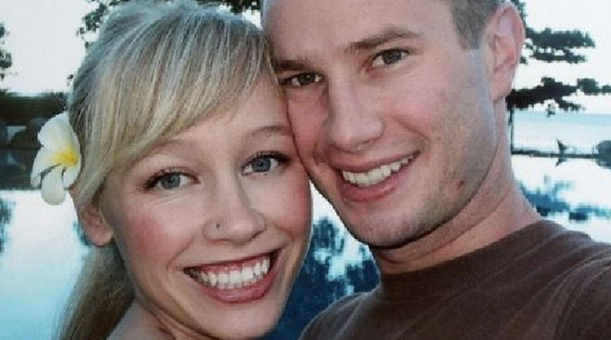
<p>Tyler Papini became an unintended subject of media attention following the events involving his mother, Sherri Papini. In November 2016, Sherri Papini captured national headlines when she disappeared from her home in California, leading to a massive search and media coverage. The narrative took an unexpected turn when law enforcement authorities revealed that she had orchestrated her own abduction.</p>
<p>The incident inevitably cast a spotlight on Tyler and his sibling, <a href="https://gazetteday.com/violet-papini/">Violet</a>, as the well-being of the children was brought into public concern amidst the unfolding story. As the children of Sherri Papini, Tyler and Violet&#8217;s lives were momentarily thrust into the limelight, raising questions about their future and the impact of their mother&#8217;s actions on their welfare. It was during the legal proceedings following the revelation of the hoax that discussions about Tyler&#8217;s and his sister&#8217;s situation became a focal point, indicating the broader familial consequences of the incident.</p>
<h2>Background and Overview</h2>
<p>Tyler Papini is the <a href="https://gazetteday.com/sherri-papini/">son of Sherri Papini</a>, a figure who became well-known in the media after a high-profile incident in 2016. This section provides an overview of Tyler&#8217;s familial connections, the wider community response, and the historical context of the events that brought the Papini family to the public’s attention.</p>
<h3>Personal Life and Relationships</h3>
<p>Tyler Papini is the <strong>child</strong> of Sherri Papini, who gained national attention due to a fabricated abduction story. Sherri Papini, identified as Tyler&#8217;s <strong>mother</strong>, experienced scrutiny from <strong>authorities</strong> after her return. Keith Papini, Tyler&#8217;s <strong>father</strong>, supported Sherri through the unfolding events. The <strong>family</strong> is based in <strong>Redding</strong>, <strong>Northern California</strong>, and despite the challenges faced, they have strived to maintain a semblance of normalcy.</p>
<h3>Community Impact</h3>
<p>The Papini <strong>family</strong>&#8216;s ordeal had considerable impact on their <strong>community</strong> in <strong>Northern California</strong>. Local law enforcement invested significant resources into investigating Sherri&#8217;s disappearance, with the community&#8217;s trust being tested when details of the hoax were revealed by <strong>authorities</strong>.</p>
<h3>Historical Context</h3>
<p>In 2016, Sherri Papini&#8217;s case captured national interest when she disappeared but was found several weeks later. Law enforcement and the <strong>community</strong> engaged deeply with the case. Once Sherri&#8217;s story was scrutinized, it was disclosed by <strong>authorities</strong> that she had been staying with a <strong>former boyfriend</strong> and had not been abducted. This revelation had a notable effect on the family&#8217;s dynamic and the perception of the case in the public sphere.</p>
<h2>The Incident</h2>
<p>The disappearance of Sherri Papini in November 2016 sparked widespread concern and a thorough investigation led by the Shasta County Sheriff&#8217;s Office, with numerous details of the alleged kidnapping emerging that would later be scrutinized.</p>
<h3>Abduction Details</h3>
<p>Sherri Papini was reported to have been abducted while jogging near her Redding home. Initial reports suggested that she had been <strong>kidnapped at gunpoint</strong> by two masked individuals. According to Papini, she was <strong>branded</strong>, <strong>chained</strong>, and <strong>tortured</strong> using implements like clamps and a wood-burning tool. Her harrowing story included descriptions of being held captive, enduring <strong>burns</strong>, and other forms of physical abuse.</p>
<h3>Disappearance and Search Efforts</h3>
<p>Following Papini&#8217;s reported <strong>missing</strong> status, the Shasta County Sheriff&#8217;s Office launched a major <strong>investigation</strong>. Law enforcement officers and community volunteers scoured the area. A <strong>GoFundMe</strong> campaign was also set up to assist the search efforts. Papini was reportedly <strong>found</strong> on <strong>Thanksgiving Day</strong>, 22 days after her disappearance. She was discovered alone, with a <strong>chain around her waist</strong> and injuries consistent with her account. <strong>DNA</strong> evidence was collected, and authorities followed up on all potential leads to apprehend the alleged captors.</p>
<h2>The Investigation Process</h2>
<p>The investigation into Sherri Papini&#8217;s disappearance and subsequent reappearance involved meticulous work by law enforcement, featuring innovative technological methods, community engagement, and extensive media coverage.</p>
<h3>DNA Evidence and Leads</h3>
<p>Upon Sherri Papini&#8217;s return, <strong>law enforcement officers</strong> utilized DNA evidence found on her clothing to pursue potential leads. The presence of <strong>male DNA</strong> that did not match her <strong>husband</strong>, Keith Papini, offered a critical pivot away from the narrative of Sherri Papini’s alleged abduction. This genetic material allowed authorities to apply <strong>genetic genealogy</strong> techniques, which have proven instrumental in resolving numerous cold cases.</p>
<h3>Law Enforcement Strategies</h3>
<p>The <strong>FBI</strong> and local law enforcement employed a range of strategies to investigate the alleged crime. Early on, officials expressed doubts about Papini&#8217;s story due to inconsistencies in her accounts and the absence of any witnesses or physical evidence corroborating an abduction. Interviews with Sherri Papini and her family, including her <strong>mother</strong> and Keith Papini, were part of a comprehensive effort to verify the <strong>story</strong> she presented to the <strong>community</strong> and the <strong>media</strong>.</p>
<h3>Public Response and Media</h3>
<p>The story of Sherri Papini&#8217;s alleged kidnapping generated a massive <strong>public response</strong> with communities rallying in support, as the case was prominently featured in <strong>media</strong> outlets like the <strong>Sacramento Bee</strong>. <strong>Authorities</strong> consistently provided statements to transparently update the public and address the concerns of the <strong>Latino community</strong>, who were implicated in her account as the perpetrators. As the investigation continued, the <strong>media</strong> played a role in both disseminating information and scrutinizing the evolving narrative, which eventually contributed to the unraveling of the <strong>hoax</strong>.</p>
<p>Throughout the investigation, <strong>law enforcement</strong> maintained a <strong>confident</strong> and <strong>knowledgeable</strong> stance, methodically gathering evidence, until they were able to compile enough information to make an <strong>arrest</strong>. The story&#8217;s conclusion served as a poignant reminder of the thin line between perception and reality within the court of public opinion.</p>
<h2>The Legal Proceedings</h2>
<p>In a complex legal case that drew national attention, Sherri Papini faced serious legal actions due to her false statement to law enforcement. The proceedings involved multiple court appearances and detailed testimony about the consequences of her actions.</p>
<h3>Court Appearances and Charges</h3>
<p>Sherri Papini was accused of making false statement to federal officers and lying about her kidnapping. The case involved numerous court appearances in which federal prosecutors outlined the charges, emphasizing the deliberate nature of the hoaxes she perpetuated. Her arrest and subsequent charges underscored the gravity of lying to law enforcement.</p>
<h3>Sentencing and Consequences</h3>
<p>In the culmination of the case, Sherri Papini was sentenced to 18 months in prison, followed by 36 months of supervised release. The sentencing also included a restitution requirement, highlighting the financial implications of Papini&#8217;s actions on public resources used in the investigation. Federal prosecutors aimed to underscore the severity of making false statements and the burden it put on the legal system.</p>
<h3>Defense and Legal Representatives</h3>
<p>Sherri Papini&#8217;s defense attorney, William Portanova, presented arguments and statements in her defense. The legal strategy revolved around addressing her claimed PTSD and casting Papini&#8217;s guilt in a context that could mitigate the consequences of her actions. Despite their efforts, they were unable to prevent a significant sentence.</p>
<h3>Victim, Public and Family Statements</h3>
<p>The case elicited statements from a variety of individuals including Papini&#8217;s husband, Keith Papini, and her mother, as well as law enforcement and other members of the community. Each statement offered a unique perspective on the impact of her actions, ranging from personal betrayal to frustration over the misuse of community resources. This collective response played a part in the final rulings and public understanding of the case.</p>
<h2>Aftermath and Societal Implications</h2>
<p>The case of Sherri Papini not only shook her family&#8217;s core but also left a lasting imprint on the societal and legal landscapes, eliciting strong reactions and reflections from various segments of the community.</p>
<h3>Impact on Family and Personal Life</h3>
<p>Tyler Papini, as a child caught in the turmoil of his mother&#8217;s actions, has undoubtedly faced personal challenges. <strong>Sherri Papini’s</strong> disappearance and the subsequent revelation that it was a hoax likely had profound implications for her family dynamics. The strain on Tyler’s personal life and the stigmatization from the public eye poses challenges in his formative years. <i>Keith Papini</i>, Tyler’s father, has had to navigate this strain and the effects of <i>Sherri&#8217;s</i> actions, which include her arrest, the media spectacle, and the familial disruption.</p>
<h3>Community and Social Reflection</h3>
<p>The community of <strong>Redding</strong> and the wider <strong>Northern California</strong> area grappled with a gamut of emotions, from sympathy during her “abduction” to betrayal after learning of the hoax. The incident prompted a collective examination of trust, safety, and the resources allocated by the community in such crises. The case has sparked dialogues around <strong>mental health</strong> and the responsibilities individuals owe to one another, especially when deceit has misdirected communal goodwill.</p>
<p>Social media was also full of news about the faking kidnapping story.</p>
<h3>Criminal Justice and Case Insights</h3>
<p>Federal prosecutors dealt with <i>Papini&#8217;s</i> case by addressing charges of <strong>mail fraud</strong> and false statements to law enforcement. The investigation highlighted advancements in DNA technology, which together with tips from the community, were instrumental in cracking the case. The implications for the criminal justice system include a deeper look into handling missing persons reports and ensuring that the pursuit for justice is thorough, regardless of the narrative&#8217;s appeal.</p>
<h3>Media and Public Opinion</h3>
<p>Media coverage played a crucial role in framing <i>Sherri Papini’s</i> story, from the initial portrayal as a missing supermom to the <strong>abduction</strong> hoax revelation. The switch from nationwide empathy to critical scrutiny represents a complex dynamic between the media, the public, and their perception of such events. Public opinion has oscillated between concern for Tyler and his family’s wellbeing and outrage over the resources and emotional investment squandered on the fabricated tale.</p>

Tyler Papini: What Really Happened with Tyler and Violet Papini?